Blog

  • Vanished Civilizations Along Ancient Trade Routes

    Vanished Civilizations Along Ancient Trade Routes

    DISCLAIMER: This article is published for informational and educational purposes only. Qudos Chronicle presents historical explorations based on publicly available research, archaeological findings, and general academic interpretations. It is intended for educational interest and should not be considered definitive scholarly analysis.

    Trade routes have always been more than pathways for goods. They functioned as channels of culture, technology, language, and belief systems. Along these vast networks, entire civilizations rose to prominence, flourished through exchange, and in some cases disappeared, leaving behind fragmented evidence of their existence.

    The study of vanished civilizations connected to trade routes offers a unique perspective on how interconnected the ancient world truly was—and how fragile that interconnectedness could become.

    The Importance of Ancient Trade Networks

    Long before modern transportation, trade routes shaped the development of societies across continents. Goods such as spices, textiles, metals, and ceramics traveled thousands of kilometers through complex networks of merchants and intermediaries.

    These routes were not static. They evolved over time due to political shifts, environmental changes, and technological advancements. When a route thrived, the settlements along it often prospered. When it declined, entire regions could experience economic collapse.

    Some civilizations depended heavily on their position within these networks. Their survival was closely tied to the flow of commerce and cultural exchange.

    Civilizations Built on Exchange

    Many ancient societies emerged in strategic locations along trade corridors. River valleys, mountain passes, and coastal hubs became centers of activity where merchants gathered and communities developed.

    These civilizations often displayed remarkable diversity. Archaeological evidence suggests that goods, languages, and artistic styles blended across regions, creating culturally rich societies.

    However, dependence on trade also created vulnerability. If a route shifted or declined, the prosperity of these civilizations could diminish rapidly.

    Environmental Shifts and Route Disruption

    One of the major reasons civilizations along trade routes declined was environmental change.

    Rivers changed course, deserts expanded, and climate fluctuations altered the viability of established paths. When this happened, trade networks were forced to adapt, sometimes bypassing once-thriving settlements entirely.

    Without consistent trade flow, local economies weakened. Agricultural production alone was often insufficient to sustain urban centers that had grown dependent on external exchange.

    Over time, populations migrated toward more stable regions, leaving behind partially abandoned cities and infrastructure.

    Political Instability and Fragmentation

    Political factors also played a significant role in the disappearance of civilizations connected to trade routes.

    Empires expanded and collapsed, borders shifted, and access to trade corridors was frequently contested. When political control over a region weakened, security along trade routes often deteriorated.

    Merchants avoided unsafe areas, and once-busy trade hubs became isolated. Without commercial activity, administrative systems and local economies declined.

    In some cases, new political powers redirected trade through alternative routes, permanently altering economic geography.

    Archaeological Evidence of Forgotten Hubs

    Modern archaeology has uncovered numerous sites that once served as important trade centers but later fell into obscurity.

    Excavations often reveal layers of occupation, indicating long-term settlement followed by gradual decline. Artifacts from distant regions provide evidence of extensive trade connections.

    Items such as foreign coins, ceramics, glassware, and metals suggest that these civilizations were deeply integrated into global exchange systems.

    However, the sudden reduction of imported goods in later layers often signals the collapse or redirection of trade routes.

    Cultural Exchange and Lost Identity

    Trade routes were not only economic systems but also cultural bridges. Ideas, religious beliefs, and artistic traditions spread alongside material goods.

    As civilizations declined, some cultural practices disappeared or transformed significantly. In certain cases, only fragments of artistic styles or linguistic traces remain as evidence of past interactions.

    This cultural blending makes it difficult for researchers to assign clear identities to some archaeological sites, especially when written records are limited or absent.

    The loss of cultural continuity adds another layer of mystery to vanished civilizations.

    Technological Limitations of Reconstruction

    Reconstructing the history of these civilizations presents significant challenges.

    Many sites are partially buried, eroded, or located in remote regions. Excavations can be limited by geography, political conditions, or environmental preservation concerns.

    Additionally, the absence of complete written records makes interpretation difficult. Researchers must rely on material evidence, comparative analysis, and indirect historical references.

    As a result, many conclusions remain tentative, with new discoveries occasionally reshaping established theories.

    The Role of Trade Route Transformation

    Not all civilizations disappeared entirely. In some cases, they were absorbed into emerging networks or transformed into smaller communities.

    When trade routes shifted, some regions adapted by developing new economic strategies. Others experienced gradual decline as commercial activity moved elsewhere.

    This transformation highlights the dynamic nature of ancient economies. Trade networks were constantly evolving systems rather than fixed structures.

    Civilizations that once appeared dominant could quickly become peripheral when global patterns changed.

    Rediscovering Lost Connections

    Modern research continues to reveal unexpected connections between ancient civilizations.

    Advances in archaeological science, including isotope analysis and material sourcing techniques, allow researchers to trace the origins of artifacts with greater precision.

    These methods have uncovered evidence of long-distance trade that was previously unknown, revealing a far more interconnected ancient world than once assumed.

    Each discovery adds depth to our understanding of how civilizations interacted and depended on one another.

    Lessons from Vanished Civilizations

    The study of civilizations that disappeared along trade routes provides valuable insights into resilience and adaptation.

    Economic dependence, environmental vulnerability, and political instability remain relevant factors in modern societies. While historical contexts differ, the underlying patterns of change often remain consistent.

    These ancient examples illustrate how complex systems can collapse or transform when critical connections are disrupted.

    At the same time, they demonstrate the adaptability of human societies, which continuously reorganize in response to shifting conditions.

    The Continuing Mystery of the Ancient World

    Despite extensive research, many questions remain unanswered about civilizations linked to ancient trade routes.

    Some sites remain partially unexplored, while others yield interpretations that continue to evolve. New discoveries frequently challenge existing assumptions, ensuring that the study of ancient networks remains an active field of inquiry.

    The fragmented nature of the evidence means that complete reconstruction is often impossible. Instead, researchers build layered interpretations that evolve over time.

    These uncertainties are not limitations but invitations to further exploration.

    DISCLAIMER: Qudos Chronicle is an informational publication focused on historical exploration and educational content. Articles summarize general research perspectives and publicly available archaeological findings. Readers seeking authoritative historical conclusions should consult academic experts and primary research sources.


  • Historic Mysteries That Still Puzzle Researchers

    Historic Mysteries That Still Puzzle Researchers

    DISCLAIMER: This article is published for informational and educational purposes only. Qudos Chronicle presents historical mysteries and interpretations based on publicly available sources and general research discussions. It is not intended as definitive academic analysis or professional historical guidance.

    Across the world, certain historical events remain partially unexplained despite decades—or even centuries—of investigation. These mysteries persist not because of a lack of interest, but because evidence is incomplete, contradictory, or lost to time.

    Unlike well-documented historical narratives, unresolved cases challenge researchers to interpret fragments of information. They sit at the intersection of archaeology, anthropology, folklore, and historical analysis, often inviting multiple competing theories.

    Why Historical Mysteries Persist

    Many unresolved historical questions originate from gaps in the record. Ancient societies did not always preserve detailed documentation, and even when records existed, they were often destroyed by conflict, environmental conditions, or time.

    In other cases, records survived but remain ambiguous. Language changes, incomplete translations, or symbolic writing systems can make interpretation difficult.

    Archaeological evidence also presents limitations. Physical remains degrade, and what survives is often partial. Researchers must reconstruct events from incomplete datasets, which can lead to multiple plausible explanations.

    As a result, some historical questions remain open-ended, even with modern investigative tools.

    Disappearing Settlements and Unclear Abandonment

    One recurring category of mystery involves settlements that appear to have been abandoned suddenly or without clear explanation.

    In some cases, archaeological sites show evidence of organized life followed by rapid departure. Homes may remain intact, tools left behind, and daily objects scattered in ways that suggest abrupt change.

    Possible explanations vary widely. Environmental shifts, resource depletion, or economic collapse are frequently considered. However, in certain cases, evidence does not clearly support a single cause.

    These sites continue to be studied because they provide insight into how ancient communities responded to uncertainty and disruption.

    Unexplained Artifacts and Their Interpretations

    Another category of mystery involves artifacts whose purpose is not immediately clear.

    Some objects discovered in archaeological contexts do not match known tools or cultural items from their time period. Their shapes, materials, or inscriptions can be difficult to classify.

    Researchers often propose multiple interpretations, ranging from ceremonial objects to functional tools whose use has been forgotten.

    Over time, some artifacts are reclassified as new discoveries or analytical techniques provide additional context. Others remain ambiguous despite continued study.

    These unresolved cases highlight how knowledge evolves as new information becomes available.

    Lost Knowledge and Fragmentary Records

    Historical mysteries are often connected to lost knowledge traditions. In many ancient societies, information was transmitted orally or recorded in fragile materials such as papyrus, parchment, or wood.

    When these materials deteriorate or are destroyed, entire segments of knowledge may disappear.

    Even when partial records survive, they may lack context. A single surviving text may reference events, technologies, or beliefs that are no longer fully understood.

    This fragmentation creates challenges for modern researchers attempting to reconstruct historical realities.

    Conflicting Accounts in Historical Sources

    Some mysteries arise not from missing evidence, but from conflicting descriptions of the same event.

    Different chroniclers may present varying interpretations influenced by cultural perspective, political affiliation, or limited information.

    When sources disagree, historians must evaluate credibility, bias, and context. However, in some cases, no single version can be definitively confirmed.

    These contradictions do not necessarily indicate error; rather, they reflect how history is recorded through human experience.

    Natural Phenomena and Misinterpretation

    In some historical mysteries, natural events may have been misinterpreted or poorly understood at the time.

    Unusual environmental occurrences such as earthquakes, floods, atmospheric phenomena, or celestial events may have been recorded in symbolic or mythological language.

    Modern researchers sometimes attempt to correlate these accounts with known natural events. However, without precise data, conclusions remain uncertain.

    This overlap between observation and interpretation contributes to ongoing debate in historical research.

    The Role of Modern Technology in Solving Mysteries

    Advances in technology have significantly improved the study of historical mysteries.

    Techniques such as satellite imaging, ground-penetrating radar, and digital reconstruction allow researchers to examine sites without invasive excavation.

    Additionally, improved dating methods and material analysis provide more accurate timelines for historical artifacts.

    Despite these advancements, not all mysteries are resolved. In some cases, new data raises additional questions rather than providing definitive answers.

    Why Unresolved Mysteries Matter

    Historical mysteries are not simply unanswered questions; they are opportunities for deeper exploration of the past.

    They encourage interdisciplinary collaboration, combining archaeology, linguistics, geology, and other fields to build broader interpretations.

    These mysteries also remind us that historical knowledge is constantly evolving. What is considered uncertain today may become clearer in the future as new evidence emerges.

    The presence of unresolved questions highlights the complexity of human history and the limitations of surviving evidence.

    Continuing the Search for Answers

    Researchers continue to investigate historical mysteries around the world, revisiting old sites and reanalyzing previously discovered materials.

    Each new discovery has the potential to reshape existing theories or introduce entirely new perspectives.

    However, some mysteries may never be fully resolved. Instead, they remain open areas of inquiry that inspire ongoing curiosity and research.

    In this sense, historical mysteries are not failures of knowledge but reflections of its depth and complexity.

    They represent the boundaries of what is currently known and the possibilities of what may yet be discovered.

    DISCLAIMER: Qudos Chronicle is an informational and educational publication. Articles present general historical discussions based on publicly available sources and interpretations. Readers seeking authoritative historical conclusions should consult academic publications and professional researchers.

  • Forgotten Inventions That Were Ahead of Their Time

    Forgotten Inventions That Were Ahead of Their Time

    DISCLAIMER: This article is published for informational and educational purposes only. Qudos Chronicle explores historical topics, cultural narratives, and documented accounts from various periods. Content is intended for general interest and should not be considered professional historical or scientific advice.

    History often celebrates inventions that transformed society, but many remarkable ideas never received the recognition they deserved. Some inventions appeared decades before the world was ready for them. Others were overshadowed by competing technologies, limited resources, or changing economic conditions.

    Today, when people think about innovation, they usually focus on modern breakthroughs. Yet many concepts that seem contemporary have roots stretching far into the past. Examining forgotten inventions reveals how creative individuals frequently imagined the future long before technology could fully support their ideas.

    When Great Ideas Arrive Too Early

    An invention does not succeed simply because it is useful. Timing plays a crucial role.

    Throughout history, inventors have introduced devices and systems that solved real problems but struggled because society lacked the infrastructure needed to support them. In some cases, production methods were too expensive. In others, consumers were not prepared to adopt unfamiliar technologies.

    As a result, certain inventions disappeared from public attention despite demonstrating impressive potential.

    Historians often refer to this phenomenon as being “ahead of its time.” The idea itself may have been sound, but external conditions prevented widespread adoption.

    Early Concepts of Personal Transportation

    Long before modern transportation became commonplace, inventors experimented with methods for improving personal mobility.

    Various designs appeared that attempted to reduce travel time, improve efficiency, or make movement more comfortable. Some machines incorporated mechanical principles that would later become standard in modern vehicles.

    Many of these early concepts remained experimental because roads, manufacturing capabilities, and supporting infrastructure were insufficient. Nevertheless, they demonstrated a clear understanding of challenges that future engineers would eventually solve.

    Looking back, these inventions reveal how innovators were already thinking about speed, convenience, and accessibility centuries ago.

    Communication Beyond Distance

    Modern communication technologies allow information to travel instantly across the globe. However, the desire to overcome distance is much older than the digital age.

    Inventors developed numerous systems designed to transmit information more efficiently than traditional methods. Some relied on visual signals, mechanical devices, or coded messages.

    While these systems may appear primitive by contemporary standards, they represented significant technological achievements for their time. Many introduced concepts that influenced later developments in telecommunications.

    The progression of communication technology illustrates how innovation often occurs through gradual improvement rather than sudden transformation.

    Energy Ideas That Were Nearly Forgotten

    Energy has always shaped technological progress. Long before modern discussions about efficiency and sustainability, inventors explored alternative approaches to power generation and resource management.

    Some designs focused on reducing waste. Others attempted to harness natural forces more effectively. Although many projects never achieved commercial success, they reflected a sophisticated understanding of engineering principles.

    Economic conditions frequently determined whether these ideas survived. If traditional energy sources remained affordable and accessible, alternative systems often struggled to gain support.

    Today, researchers occasionally rediscover concepts that resemble proposals developed generations earlier.

    The Influence of Materials and Manufacturing

    Many forgotten inventions failed not because of poor design but because available materials limited performance.

    An inventor might envision an advanced mechanism, yet contemporary manufacturing techniques could not reliably produce the necessary components. Precision engineering, lightweight materials, and mass production methods were often unavailable.

    As technology improved, later generations revisited similar ideas with greater success.

    This pattern demonstrates an important lesson about innovation. A concept may be technically correct while remaining impractical until supporting technologies evolve.

    The relationship between invention and manufacturing continues to influence technological development today.

    Why Some Innovations Disappear

    Several factors contribute to the disappearance of promising inventions.

    Financial limitations frequently prevent large-scale production. Inventors may struggle to secure funding, attract investors, or compete against established industries.

    Public perception also matters. People often hesitate to adopt unfamiliar technologies, especially when existing solutions appear adequate.

    Competition can further complicate matters. Multiple inventors may pursue similar goals simultaneously. In such cases, one approach becomes dominant while others gradually fade from public memory.

    Historical records show numerous examples where successful technologies were not necessarily the most advanced but rather the most practical under existing conditions.

    Rediscovering Lost Creativity

    One of the most fascinating aspects of historical research involves uncovering forgotten innovations.

    Archives, patent collections, engineering drawings, and museum collections preserve evidence of remarkable creativity. These materials reveal the ambitions and problem-solving abilities of inventors whose names rarely appear in textbooks.

    Studying overlooked inventions helps challenge the assumption that progress follows a simple, predictable path. Technological development often involves experimentation, setbacks, and unexpected detours.

    Many ideas considered revolutionary today have historical predecessors that deserve recognition.

    Lessons for Modern Innovators

    The stories of forgotten inventions remain relevant because they highlight the importance of persistence, adaptability, and long-term thinking.

    Innovators frequently encounter obstacles beyond their control. Market conditions, available resources, public acceptance, and supporting infrastructure can determine whether an idea succeeds or fails.

    History demonstrates that unsuccessful commercialization does not necessarily mean an invention lacked value. Some concepts simply require the right moment to flourish.

    Understanding this perspective encourages a deeper appreciation for creativity across all periods of history.

    Looking Toward the Future Through the Past

    Examining forgotten inventions offers more than historical curiosity. It provides insight into how human imagination consistently pushes beyond current limitations.

    Every era produces visionaries who attempt to solve problems in new ways. While some inventions transform society immediately, others wait years—or even centuries—for conditions to catch up with their potential.

    The forgotten innovations of the past remind us that progress is rarely linear. Hidden within archives and historical records are countless examples of people who imagined possibilities far beyond the world they knew.

    Their stories continue to inspire curiosity, exploration, and respect for the enduring power of invention.

    DISCLAIMER: Qudos Chronicle is an informational publication focused on historical exploration, educational content, and cultural topics. Articles may summarize historical interpretations and publicly available information for general audiences. Readers seeking professional historical, engineering, or scientific guidance should consult qualified experts and primary sources.

  • The Village That Vanished Without a Trace

    The Village That Vanished Without a Trace

    DISCLAIMER: This article is published for informational and educational purposes only. Qudos Chronicle explores historical topics, cultural narratives, and documented accounts from various periods. Information presented here is intended for general interest and should not be considered professional historical research or academic advice.

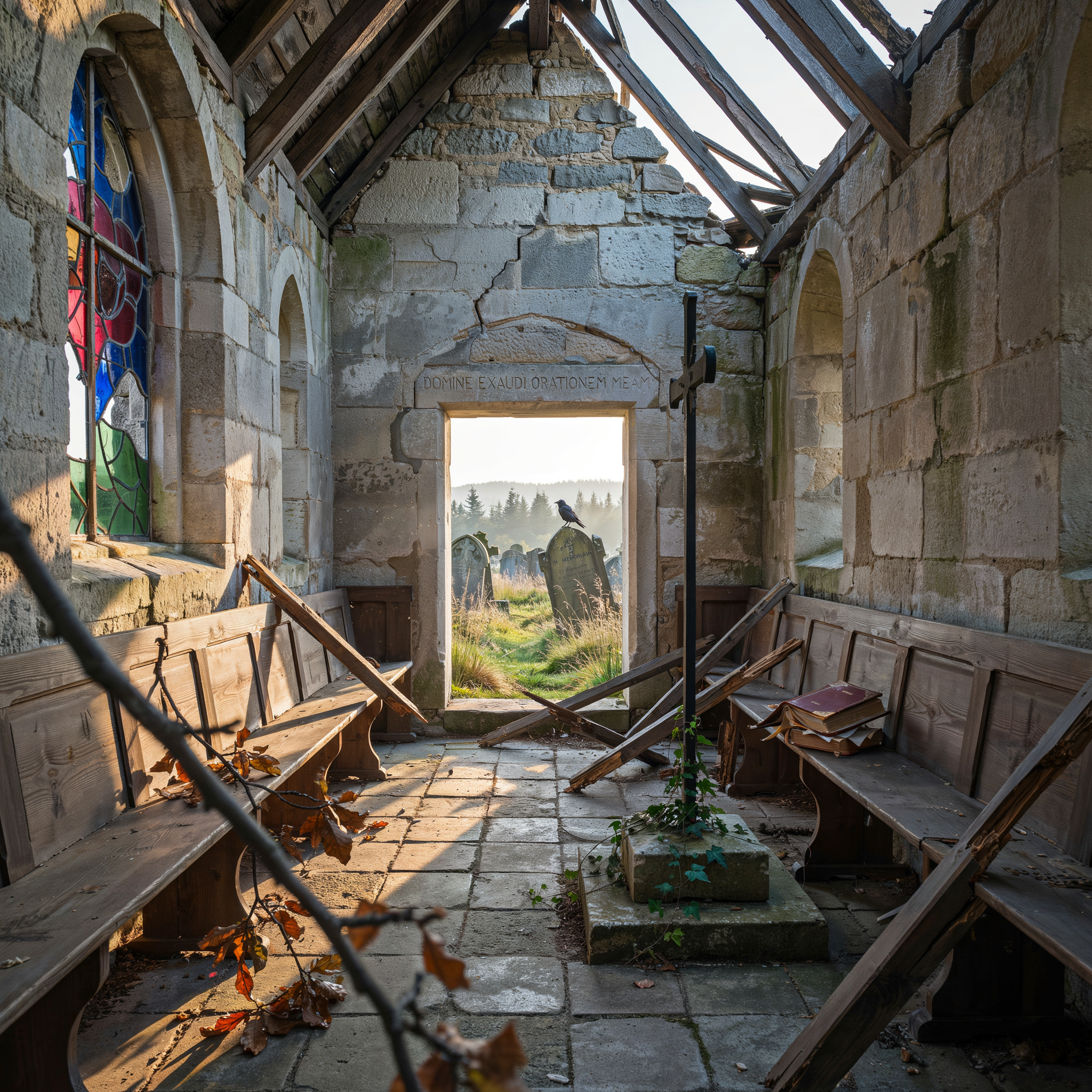
    Throughout history, countless settlements have appeared, flourished, and eventually disappeared. Some were abandoned gradually as populations moved elsewhere. Others vanished after natural disasters, economic decline, or changing trade routes. Yet a few places seem to have disappeared so completely that only fragments of their stories remain.

    The phenomenon of vanished villages has fascinated historians, archaeologists, and travelers for generations. These forgotten communities often reveal how fragile human settlements can be when faced with environmental changes, political shifts, or economic challenges.

    Why Villages Disappear

    Many people imagine ancient villages as permanent fixtures on the landscape. In reality, settlements have always been dynamic. Communities emerge where resources are available and disappear when conditions become unfavorable.

    Agricultural productivity often played a major role. A village located near fertile land could thrive for centuries. However, changing weather patterns, soil exhaustion, or prolonged drought could force residents to relocate.

    Trade routes also influenced the survival of settlements. Before modern transportation, villages frequently depended on nearby roads, rivers, or market connections. When trade shifted elsewhere, economic activity often declined rapidly.

    Political events added further uncertainty. Border changes, conflicts, and administrative decisions occasionally transformed prosperous communities into abandoned locations.

    Clues Hidden in the Landscape

    Long after a village disappears, subtle traces may remain. Archaeologists frequently identify former settlements through unusual terrain features, scattered building materials, or remnants of old roads.

    In some regions, aerial photography has revealed outlines of structures hidden beneath modern fields. Differences in vegetation growth sometimes indicate buried foundations or forgotten pathways.

    Old maps provide another valuable source of information. Cartographers occasionally recorded villages that no longer exist today. Comparing historical maps with contemporary landscapes can uncover surprising evidence of lost communities.

    Researchers also rely on written records such as tax documents, land grants, and church archives. These materials may contain references to settlements that have otherwise vanished from collective memory.

    Stories Passed Through Generations

    Not every clue comes from physical evidence. Oral traditions often preserve memories that official records overlook.

    Local legends sometimes describe abandoned villages swallowed by forests, destroyed by storms, or deserted after mysterious events. While such stories may become embellished over time, they occasionally contain kernels of historical truth.

    Communities frequently develop folklore around vanished places. Tales of hidden roads, forgotten wells, or overgrown foundations can encourage researchers to investigate areas that might otherwise remain unexplored.

    The relationship between folklore and historical research remains particularly fascinating. Legends alone rarely provide complete answers, but they can point toward locations worthy of further examination.

    Environmental Forces and Human Adaptation

    Environmental change has influenced settlement patterns throughout history. Floods, river shifts, coastal erosion, and severe weather events have all contributed to village abandonment.

    In some cases, communities attempted to adapt. Residents might relocate buildings, construct protective barriers, or modify farming practices. These efforts occasionally succeeded, allowing settlements to survive for generations longer than expected.

    However, adaptation was not always possible. When environmental pressures became overwhelming, relocation often represented the most practical solution.

    The remains of abandoned settlements therefore offer valuable insights into how earlier societies responded to changing conditions.

    The Archaeology of Absence

    One of the most intriguing aspects of studying vanished villages is that researchers often investigate what is no longer visible.

    Unlike castles or monumental structures, ordinary villages frequently leave behind modest traces. Wooden buildings decay. Roads become overgrown. Agricultural fields return to natural landscapes.

    This makes archaeological investigation particularly challenging. Researchers must piece together evidence from fragments, combining physical remains with documentary sources and regional history.

    Each discovery contributes to a broader understanding of everyday life in earlier centuries. Simple objects such as pottery fragments, tools, or household items can reveal details about trade, diet, craftsmanship, and social organization.

    Lessons from Forgotten Communities

    Although vanished villages belong to the past, their stories remain relevant today.

    Modern communities continue to face challenges related to economic transformation, environmental change, and population movement. Studying historical settlements helps illustrate how societies adapt to evolving circumstances.

    These forgotten places also remind us that history extends far beyond famous cities and major events. Countless ordinary communities played important roles in shaping regional cultures and local traditions.

    By exploring the traces they left behind, researchers gain a richer understanding of human resilience, migration, and adaptation across generations.

    Preserving Historical Memory

    As technology advances, new methods continue to improve the study of lost settlements. Satellite imagery, digital mapping, and non-invasive surveying techniques allow researchers to identify archaeological features with greater precision.

    At the same time, preserving historical records remains essential. Maps, photographs, local archives, and oral histories all contribute to reconstructing the stories of communities that have disappeared from modern landscapes.

    Every vanished village represents more than an abandoned location. It reflects the lives, ambitions, challenges, and achievements of the people who once called it home.

    The study of forgotten settlements demonstrates that even places that seem lost forever can continue to enrich our understanding of the past.

    DISCLAIMER: Qudos Chronicle is an informational publication dedicated to historical exploration, cultural topics, and educational content. Articles may summarize historical interpretations and publicly available research for general audiences. Readers seeking academic or professional historical analysis should consult qualified experts and primary research sources.